Harvest and access planning
Stand objectives, timber quality, boundaries, terrain, sensitive areas, equipment routes, landings, hauling, schedule, and end-market requirements shape feasibility.
Timber harvesting services
Request selective harvesting, clear-cut evaluation where appropriate, timber appraisal, logging coordination, access planning, cleanup, and land restoration through the existing qualification process.
Timber purchasing process
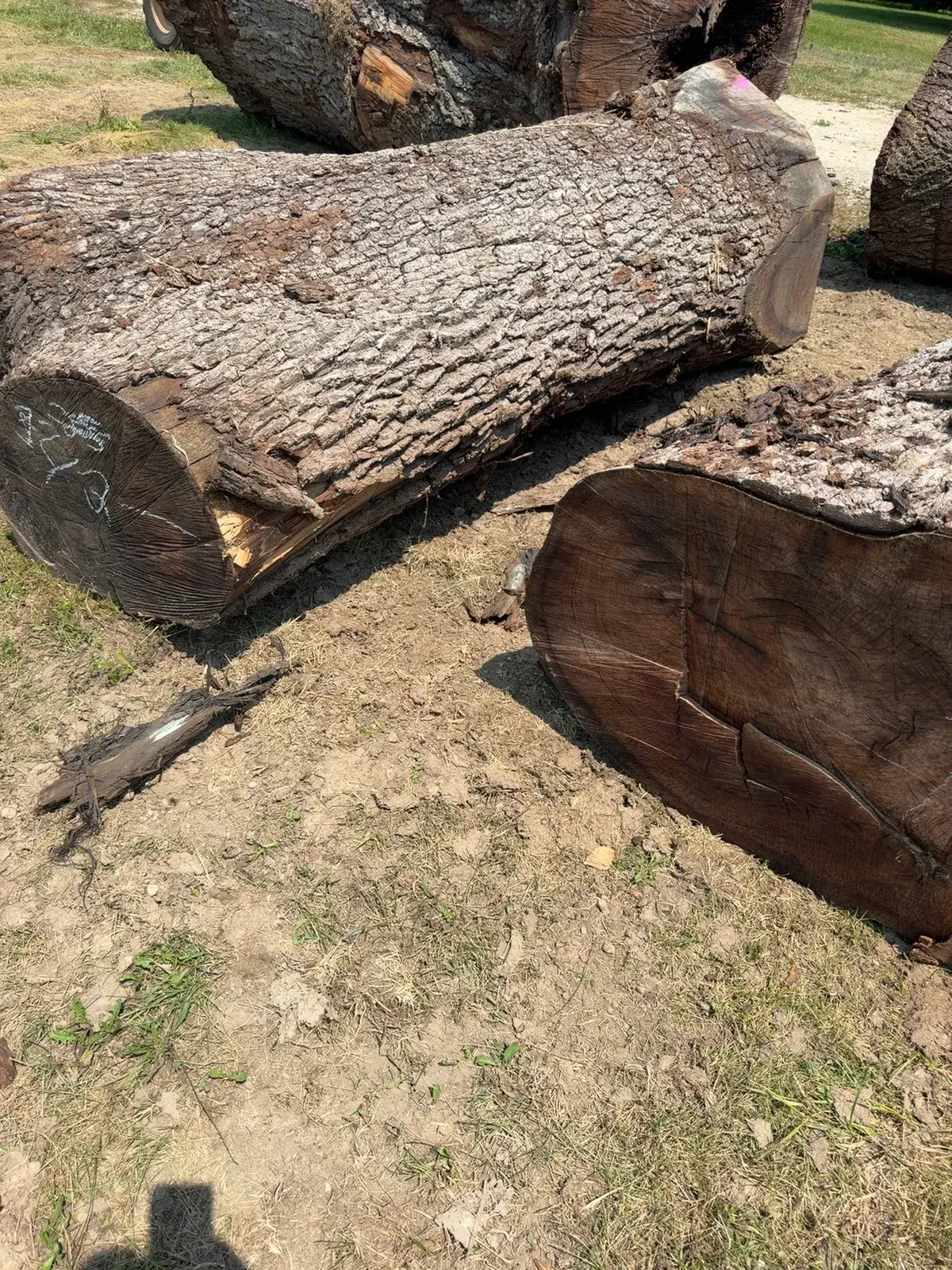
Share location, timber type, species, count, diameter, clear log length, condition, access, aerial maps, and photos.
We review usable volume, defects, metal risk, equipment needs, hauling distance, quantity, market fit, and inspection feasibility.
Promising submissions move to field evaluation, measurements, access review, recovery planning, and ownership objectives.
Next steps may include purchasing, appraisal, harvesting, log recovery, future monitoring, or a determination that the timber does not qualify.
What may qualify
Not every tree qualifies. Value depends on species, diameter, straight usable log length, condition, defects, metal risk, access, equipment requirements, location, hauling cost, market demand, and quantity.
Service qualification
Submit the property or timber location first. Travel, inspection, purchasing, harvesting, recovery, equipment, and hauling feasibility are determined case by case.
Standing timber qualification
Share the timber type, property, access, stem, condition, location, and timing details needed for an informed first review.
Stand objectives, timber quality, boundaries, terrain, sensitive areas, equipment routes, landings, hauling, schedule, and end-market requirements shape feasibility.
The proposed operation must match timber size, terrain, access, equipment needs, safety requirements, insurance requirements, and property constraints.
Landing cleanup, road and trail work, drainage protection, debris expectations, restoration priorities, and closeout should be defined before work begins.
Questions, answered
Yes. Current online inventory is only one supply path. Submit species, exact dimensions, timber format, quantity, drying, surface, matching, budget, destination, and timeline for nationwide sourcing.
Yes. Requests can range from a single live-edge slab to matched sets, bundled inventory, logs, sawlogs, custom-cut timber, project packages, recurring orders, and truckload quantities.
Buyers can request green, air-dried, or kiln-dried timber; rough-sawn or surfaced stock; flattening, ripping, cut-to-length work, repeated dimensions, and freight planning appropriate to the shipment.